


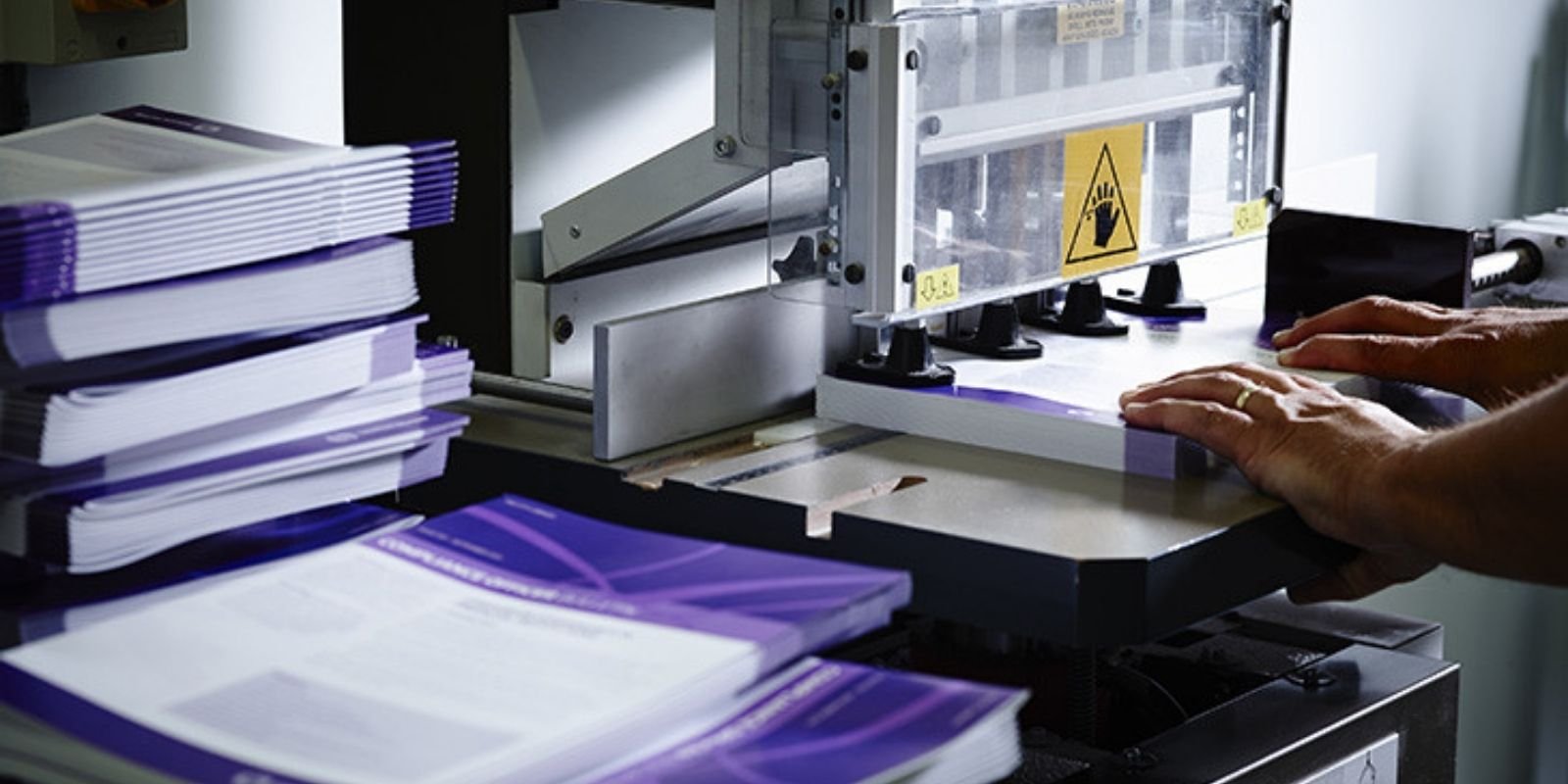
Provo is a good place to have a book printed. The city has a long publishing tradition and a large university, as well as many self-published authors nearby.
That also means there can be some confusing options. Some printers happily handle short runs of fifty copies. Others are designed for runs in the thousands. Some specialize in family histories; others primarily print theses.
This guide examines five printer options in Provo and throughout the Utah Valley area. It identifies their respective strengths and outages and how to fairly compare them all. Check for current services and prices as these vary over time.
Know What Kind of Book You Are Printing:
Work all of this out before contacting anybody. It narrows the list quickly.
Start with the quantity you need. A short run means anything from a single copy up to a few hundred. Digital printing suits that well. Longer runs of a thousand or more are usually cheaper on an offset press. The setup costs more, but the cost per copy drops a great deal.
Then think carefully about the binding. Perfect binding is the glued spine you see on most paperbacks. Saddle stitching uses staples and suits thin booklets. Spiral and coil binding lie flat, which helps for manuals and cookbooks. Hardcover, also called case binding, costs more and lasts longest. Think about how the book will be used before choosing.
Finally, consider the inside pages. A novel is black ink on plain paper. A photo book or a children’s book needs color throughout and heavier stock. Those two jobs have very different prices. Page count matters a great deal as well, since paper is a large part of the cost.
Qualimage Printing:
Qualimage is a small, family-owned printing business serving Provo. It handles both offset and digital work, which is less common in a shop of that size.
That mix matters a good deal. Offset suits larger runs and gives excellent color consistency. Digital suits short runs and reprints, with no plates to set up. A printer offering both can honestly advise which one fits your quantity. Shops with only one kind of press tend to recommend that press.
The company covers book printing, booklet printing, and binding, along with manuals and brochures. Full colour covers are printed to the dimensions of the book itself. It is a sensible first call for authors who want to talk to somebody local about a modest run. Smaller shops are also usually easier to reach when a question comes up midway through a job.
Alexander’s Print Advantage:
Alexander’s is based in Lindon, a short drive north of Provo. The business started in 1979 as a walk-in copy shop and has grown a great deal since.
Books are printed, bound, cut, and shipped from the Lindon facility. Keeping everything under one roof usually means fewer delays and better control over quality. The company works with publishing houses and self-publishing authors alike.
It is particularly strong on short-run book printing and photo books. Alexander’s also runs MyCanvas, which produces family history books and posters. If your book is heavy on photographs, this is a good name to put on your shortlist. Larger facilities like this one also tend to cope well with tight deadlines.
BYU Print and Mail:
Brigham Young University runs a large in-house print operation on its Provo campus. It is one of the biggest university print shops anywhere in the country.
The binding options cover spiral, perfect, and hardbound. The shop also prints theses and dissertations in hardbound form, including work from other universities. Family history books are a particular speciality, with a consultant who handles them.
Students and faculty are the main customers, but the public is served too. That makes it worth a look for graduate students, family historians, and anybody wanting a single hardbound copy. The campus location is also very convenient if you live nearby. Do check current public access and pricing before making the trip, since those arrangements can change.
Printegrity:
Printegrity is another Utah County option, based in Lindon on Geneva Road. It describes itself as a full-service printer, binder, and book publisher.
The company has served Utah and Salt Lake counties for over fifteen years. It works with local and international authors and ships on demand. Courses, planners, and manuals all appear in its range of work. That spread suggests comfort with spiral and coil binding as well.
Family histories are a notable part of what it does, through a partnership with a dedicated family history publisher. If your project sits somewhere between printing and publishing, this is a useful place to ask. Print on demand also suits anybody who does not want to store boxes of stock. You simply order more copies when the first batch runs low.
Print-Mark:
Print-Mark sits on West Cougar Boulevard in Provo itself. It is a long-established local print shop with a steady base of repeat customers.
A shop like this suits smaller jobs very well. Short runs, booklets, manuals, and proof copies are all everyday work. Turnaround on small jobs is often quicker than at a large plant. Being genuinely local matters here, since you can drop in and look at the paper samples in person.
Do not overlook a small shop for a first print run. Holding physical proof is far more useful than viewing one on a screen. The advice you get across a counter is often more practical too. Somebody who prints every day will spot a problem in your file quickly.
How Do You Compare Quotes Fairly?
Printing quotes are genuinely easy to misread. Two prices can look very different while covering completely different work.
Give every printer exactly the same brief. State the page count, the trim size, the binding, the paper weight, and the quantity. Say whether the inside pages are black and white or colour. A quote based on a guess is simply not worth comparing.
Then check what each price actually includes. Ask whether a printed proof is included or charged separately. Ask about file setup fees, and whether shipping is in the total. Ask what happens if you need a correction after approving the proof. Reprints are expensive, so read the proof slowly and carefully.
It is also worth asking for the price at two or three quantities. The cost per copy usually falls as the run grows. Seeing those numbers together often changes what people decide to order. Just be honest about how many copies you can genuinely sell or give away.
Which Printer Suits Your Book Best?
The right choice depends on the job itself, rather than on the company. A few simple patterns hold true most of the time.
For a short run paperback, a local shop with digital presses is usually the sensible answer. For a photo-heavy book or a long run, go to a larger facility with offset capability. For a thesis or a single hardbound keepsake, a specialist binder will serve you better than a general printer. Very few general shops do proper case binding in-house.
Family history books sit in their own category entirely. Several printers here handle them regularly, and they know the common pitfalls. That experience is worth a great deal on a project nobody wants to reprint. Scanned old photographs in particular need careful handling before printing.
Whatever you choose, ask to see a sample book first. Feel the paper, open the spine, and look closely at the cover finish. Five minutes with a physical sample tells you more than any website will. Most printers will happily post one out if you ask.
Conclusion:
There are truly a variety of book printing options in Provo and throughout the valley. Small local shops suit short runs and personal projects. Larger facilities in Lindon process larger quantities and photo-heavy work. These, family histories, and single hardbound copies are handled very well at the university press.
Know the number of pages, quantity, and binding required before requesting any quotes. Then send every printer the same brief, and compare the full totals rather than the headline figure.
Qualimage Printing is pleased to discuss your book prior to committing to anything. Let us know the number of pages, the amount, and the type of binding you are thinking of. Then we’ll make sure to let you know all of your choices in a straightforward manner.